29 May 2023

Die beitel in die hand van die Skepper (The chisel in the hand of the Creator)

Think about what you are seeing here. 
What are you seeing here? 
Are you seeing just a simple piece of scrap wood? 

Can you figure all that my son Richard did to convert this plain block of scrap wood into this carved work of art? Think of the imagination, talent, innovation, purpose, effort, time, intentional action, the instruments used to realise the dream, and on and on?

I remember the challenge given by Prime Minister P. W. Botha in about 1982 when he opened a new building at Tygerberg Medical School while I was working there after I relocated from my parents' home in Florida Park to move to Cape Town to marry Sally Swindell. He talked about being die beitel in die hand van die Skepper or a chisel in the hand of the Creator.

Another example of Richard's craftsmanship using innovation, scrap wood, chisels, and other tools. 

That is part of what we do as instruments in the Lord's hands when we help Him to bring souls closer to Him, or contribute in some way in His Work and His Glory which is to bring to pass the immortality and eternal life of man. Blessings on anyone in anything that you do, even in those times that you are as a chisel in the hands of a sculptor, being hammered on one end while being bashed against rock, stone, or wood on the other end. It can be painful, difficult to bear, because all that we are aware of is our discomfort and pain. We don't know what the end product will look like.  He is producing a beautiful sculpture. 

May we serve Him with delight and strive to bring souls to Him.

12 May 2023

Answering a question about our 'Bush People'

I may not be directly answering the question of a fellow tour guide about the ‘bush people’, and I know that there is a lot that I do not know. But, some things that I understand from my involvement in ecology might be of value to tour guides and people in general that read this boring blog of mine. 


What I share here applies to people all around the world and not specifically to San and Khoi. Wherever agro-pastoralists have impacted on hunter-gatherers, or extensive agriculture and industry impact on agro-pastoralist, the outcome has been the same – including impacting on indigenous tribes that are going extinct in Europe and Great Britain! 

A hunter-gatherer like the San lives wonderfully in harmony with nature. They exist, as do all organisms, depending on the balance in their ecosystem, and they flourish when all is good and they suffer when the balance is disturbed by natural disasters such as earthquakes, floods, fires, other humans, or any disruption. But they thrive as well as does the natural environment. They are wonderful examples of not exploiting the environment and natural resources. I love an insight shared by someone in a tour that I was leading, pointing out that the San would not harvest more than about half of what was available in order to ensure supplies for the future. He compared this to some other tribes such as the Xhosa who just eat everything that is available and then suffer because of a shortage of food. 

It is important to note that hunter-gatherers need hundreds, thousands, or tens of thousands of square metres per person. Life expectancy is limited due to sickness, wars, conflicts, deaths in childbirth, although their knowledge of natural remedies and living in harmony with each other and their environment do help them to survive very well despite these natural impacts. They cope well in their natural environment.

 
In the mountains of Lesotho the villages have some agro-pastoralism, the cultivation at a low intensity scale.

The agro-pastoralists cultivate the land to produce crops, and they breed herds of animals, and so more people can survive on a square kilometre, but they also have limited life-expectancy due to wars or conflicts, natural disasters and sicknesses. Here they are tilling the ground and eating their bread by the sweat of their faces, being more fruitful, multiplying, replenishing, and subduing the earth. They tend to be in reasonable harmony with the natural balance.

Extensive agriculture totally transforms the landscape. Canals bring water to irrigate and enable far greater cultivation as water is less limiting. Equipment, machines, technology, insecticides and fertilisers increase productivity far beyond what could be done just one hundred years ago.

Then there are higher levels of development such as has happened throughout the world and throughout history with colonisation and domination where some stronger groups expand their territory, invade, and dominate over other groups who have less strength to defend themselves. Here there is often exploitation of people and nature.

High density populations are possible, as shown in this picture that I took of New York in 1981, due to high productivity in agriculture, industry, transporting resources, health care, education, and so much more. 

Then one gets ‘civilisation’ with its extensive agriculture, mining, schools and universities, urbanisation, factories, national borders, technology, travel, dams, transportation systems, and so much that we see in our day where natural ecosystems are severely transformed, many irreversibly transformed, even with loss of many species and ecosystems. In some parts of China and Hong Kong, for example, there are thousands or tens of thousands of people in a square kilometre because of the productivity in these developed peoples and access to resources through trade and transport from distant parts of their country, or from other countries. Life expectancy increases, births often decrease and that causes more dependency of older generations on reducing numbers in younger generations, and this and the exploitation of natural resources is all too often unsustainable.

I was impressed by someone who shared with me that the San would not consume more than about 50% of what was available in order to ensure that there would always be sufficient for the future, whereas the Xhosa and some others would eat everything that is available but not produce enough to replace it. I have often observed than many drought-stricken communities look absolutely helpless and in need of food, but there is plenty of open ground that had evidently not been cultivated and I suspect that they could almost certainly have provided something for their future if they had used foresight and practised sustainable utilisation together with keeping enough in storage for future use for future planting as well as for emergencies.

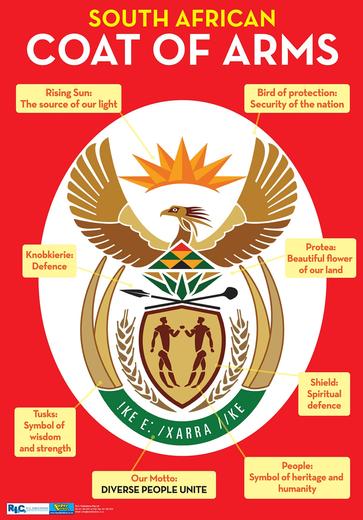
I would suggest that each of these types of communities is to be praised in many ways, but also to be discouraged in many ways. What I look forward to is an altruistic humanity that is more like the beehive that I shared recently in myblog. Here, there is wonderful harmony and each bee works selflessly for the betterment of the colony. I love our motto in South Africa - 'Diverse people unite' and our former motto 'Unity is strength'. Unfortunately, there are many people who seek to divide our people, and that division can be really destructive. But when these diverse people unite, the strength is infinitely greater because of their diversity. 

I look forward to when South Africa and the rest of the world appreciate and love their heritage and environment enough to care for it and be fruitful, multiply, replenish, subdue and have dominion over this world such that it has a wonderfully sustainable future in line with its wonderful potential. The bees do it – I fully believe that humans can do it…

08 May 2023

Everything from a bee hive is a wonderful gift

Everything from the hive is a gift of medicine.


Honey is something nutritious and life sustaining that the bees give us freely.

Raw Honey is an anti-microbial, anti-fungal, anti-bacterial super food.

It is also now being used in treating open wounds because of these very properties.

I think the Lord made the honeybee for a very special purpose – more than just pollinating flowers – which helps us grow crops so we can have something to eat.

He created them to give us special insight into His nature and what He wants from us.

Some Bee’s to ponder on:

Bee a Hard Worker

Have you ever heard the expression “busy as a bee”?

There is a very good reason for that, as bees are some of nature’s hardest workers.

To make just one tablespoon of honey for your toast in the morning, a bee has to visit 4,200 flowers!

A worker bee will make up to 10 trips a day, visiting 400 flowers.

And to make just one pound of honey (450 g), worker bees need to visit more than 3 million flowers and travel the equivalent of three times around the world!

The bees don’t mind doing it, because they care about their hive.

The harder they work, the happier and more productive their colony can be.

In a bee colony, every bee has a job.

There are worker bees, queen bees, and drones.

The queen lays the eggs, and the workers find nectar and make honey.

Did you know, the male bee called a drone doesn’t have a stinger?

That means they can’t defend the hive, and not only that, they don’t gather nectar, make honey, or lay eggs.

At first, drones might appear to be a little worthless!

But in a hive, no one is worthless.

The drones help feed the larvae, then the babies, among other responsibilities.

They might not collect pollen or have the highest position in a beehive, but they do have a very vital part to play.

They give their all to do it.

Bee Respectful

Honeybees are very loyal to their queen.

They will go wherever the queen goes and do whatever is needed to make sure their leader is healthy and happy, and they’ll work hard to help the queen do her part for the hive.

The queen’s main job is to lays eggs so the colony will grow; everyone else really works to feed the larvae and protect the queen.

Bee Humble

Here’s an Amazing Fact:

A cousin of the honey bee is the bumblebee.

But that was not their original name.

Instead, they used to be called “humble bees”!

Evidently, way back in history, some English children couldn’t say “humblebee” very well, and instead they would say “bumblebee.”

This cute nickname stuck, and even adults started calling them “bumblebees.”

Bee Holy

A long time ago, a scientist claimed bumblebees shouldn’t be able to fly based on aerodynamics, which is the study of flight. But – no-one told the bumble bee that, so it just carried on flying anyway.

Well, today they know how such a large insect with such small wings can fly, but at one point, some people thought it should have been impossible.

Of course, it isn’t impossible at all because the bumblebee keeps flying.

We should take a lesson from the humble bumblebee, which still flew when scientists said it should be impossible.

Bee Sure to Share and Serve

Honeybees will fly as far as 12 km (8 miles) in search of nectar – but usually within 3 km. But, consider that 3 km to a bee the size of 10 mm is like about 48 000 km for an average adult human!

Whenever they find what they are looking for, no matter where they find it, they will turn right around and make a “beeline” back to their hive so that all the bees can join in the good news and go off to get some nectar.

Did you know that most honeybees spend almost all of their time feeding other bees, rather than themselves?

And not only will you find a bee always ready to feed another bee, they’ll even feed bees from another colony!

This is why scientists call bees a social insect.

They like to interact and “bee” with one another; mutual feeding seems to be a part of that special relationship.

Did you know that bees produce a lot more honey than they need to feed themselves?

They always have an overflow that others — like you, me, and honey badgers, with a sweet tooth — can also have!

Bee Born Again

Did you know that in order for a bee to fly, it must be born twice?

After a queen lays an egg in a chamber, the drones get busy feeding the larva after it hatches.

When a larva gets big enough, the worker bees seal it in a tomb-like chamber where it begins to change, a process called metamorphosis.

When it is done with this transformation, it is “born again” as a new creature – an adult bee.

But it isn’t always easy.

When it’s finally done changing, it has to break out of the chamber, struggling and wiggling.

In the process, the bee actually breaks a membrane on its back that holds its wings down!

Eventually, their wings dry out and the new bees are able to fly.

Isn’t that incredible?

In other words, they are born twice and they’re able to fly only because they are re-born through a struggle.

Well, that’s exactly what it is like for you and for me.

Bees Are Amazing, and So Are You!

As a tour guide, I think that this information about honey and bees is of value for tour guides to share, and also the relationship to gum trees. I often mention, when going past gumtrees that, although it is an aggressive invasive, the presence of the gumtree in South Africa is permissible because of the fact that it enables bees to thrive and bees facilitate the production of about 76% of our agricultural crops. So, the gain outweighs the pain, or the pros exceed the cons... It is worth reading a document released by SANBI. Included in the debate is: 

  • "Outside their natural ranges, eucalypts are both lauded for their beneficial economic impact and criticised for being ‘water-guzzling’ invasive aliens, leading to controversy over their total impact."; 
  • "The listed species have been declared invasive because of their negative impact on water resources, biodiversity, erosion and increased fire risk."; 
  • "The six gum species listed in South Africa as invaders need only be removed if they are not in the correct place in the landscape. Because gum trees have a value in society for their timber, as a bee foraging resource, and their ability to provide shade and wind protection, the new regulations only require the removal of gum trees where they are invasive or have a negative environmental impact."; and 
  • "Gums in the correct place in the landscape are critical to honey bees"

Here’s one last Amazing Fact:

The brain of a bee is no bigger than the size of a small pinhead.

Yet despite their small-sized brains, bees have a very complex society, they communicate with one another, and they design and build one of the strongest homes on the planet, inside the dark beehive, called the honeycomb.

Sources:

Charles J. Adams, quoting from his long-time friend Pastor Chris Smit from Wilderness Pentecostal church, with some editing by Les Powrie.

https://www2.gov.bc.ca/assets/gov/farming-natural-resources-and-industry/agriculture-and-seafood/animal-and-crops/animal-production/bee-assets/api_fs111.pdf

https://www.honeybeeheroes.com/#:~:text=More%20than%2050%20crops%20in,plums%E2%80%A6%20the%20list%20goes%20on!

https://www.sanbi.org/wp-content/uploads/2018/05/infosheet-crop-plants-honey-bee-forage-19-11-2014.pdf

https://theconversation.com/what-honeybees-in-south-africa-need-from-people-better-managed-forage-166369

https://www.sanbi.org/wp-content/uploads/2018/05/gumsbees-web-version-hyperlinks.pdf  

08 April 2023

My WhatsApp Status

Sally and I were recently invited by some missionaries to use our WhatsApp Status as a tool to share the Gospel.


I have made some Lekach to celebrate, Rosh Hashanah, the head of the year (not calendar year, but the start of a new period after Easter), and Pesach (Passover), to symbolise a sweet new year. Sweet because of what Easter signifies - spiritual rebirth through the forgiveness of sins and physical rebirth because we will all be resurrected. All this is because of the atonement wrought by Jesus Christ in Gethsemane, on Golgotha, and emerging from the tomb in the Garden.

Well, I must admit that I had not often looked at Status - it is so often just time-consuming but not necessarily the best use of that time... 

I considered the challenge and I started to experiment. I cannot recall all that I have shared since receiving the challenge. It is evident that my Status is only visible for about 24 hours, then disappears. It evidently cannot be forwarded by me or anyone else, and once posted it cannot be reused or altered - I can only delete it because of a typo or error, and then I need to recreate it.

Another thing that I try to do is to rarely simply post what someone else has posted - to me that is simply being a consumer rather than rising to the challenge of being a producer. Heavenly Father challenged us to be fruitful, multiply, and replenish the Earth, subdue it and have dominion over it. I think that He would rather that I be a primary producer rather than simply using or comsuming what someone else produced - especially if not giving credit to whoever created it! That could be called plagiarism...

So, I have tried, and tried, and am coming to learn some tricks of the trade. A post must not be longer than 700 characters, or something like that. That includes a link to the original source. Simply sharing something from YouTube, Pinterest, Twitter, or other such sources might give no hint as to what is being shared, so I try to share it in a way that will help someone to see if it is worth clicking on the link.

The most important thing is that I am sharing things that demonstrates how the Spirit has touched me - what the Spirit has taught me. 

I find that sometimes it is good to highlight something and then click Share, and copy the link. At times I share what is highlighted, and that includes a link. I prefer it when there is a link so that someone can read the scripture or source. At least I try to include a reference to a scripture or a citation, even if not a clickable or tappable link.

I see that it is also easy to send my WhatsApp Status as my Story in Facebook, and it sends an image of my WhatsApp Status and shares in to Facebook.

This one is shared in a way that a preview shows what the link is, and I hope it encourages someone to actually click on the link. 

I find that sometimes it is best to share something with myself - Les Powrie (You) - as the WhatsApp recipient. I then can estimate the length of the post to see if it will fit in a single post. I can also preview what I am sharing. I then forward what I formulate to my Status, and sometimes to family and others. 

I find that if I want to send it to a Broadcast List, I need to copy the post (tap and hold, then click Copy) and then paste it in the Broadcast. I cannot use Broadcast Lists on the laptop, only on the phone, and it is evident that WhatsApp makes it difficult to simply broadcast things and thus become a nuisance. I hope that I am not a nuisance. Some people have blocked my number, so I guess that I have been a nuisance at times...😔

Here is a scripture reference, and a comment that I copied from my Notes in the Gospel Library app. This note was just too long for the link to appear below it, but at least the scripture reference is given.

Here is a similar thing that I copied from my Notes in the Gospel Library app. This note is short enough for the link to appear below it, and a reader can click on the link and it will open in Gospel Library if installed, or in a web browser.

Here is a preview, scripture reference, my comment, and clickable or tappable link.

Here is an italicised scripture, scripture reference, my comment, and clickable or tappable link. 
See below for italicising text or making it bold.

To italicise, or make bold in WhatsApp, use Underscore _ or Asterisk * before and after the text to italicise, without spaces at start or finish and without line breaks. _italicise_, not _italicise _ or *bold* not * bold*, or 
*Mary, Mary, quite contrary*
*How does your garden grow?*
Play around to get the hang of it 😀

Here is a scripture, reference, and clickable or tappable link.

Here is a scripture and reference. The quote is too long for a link to appear.

I am sowing seeds, or casting a net. I hope that some seeds will fall on good ground and yield thirty-, sixty-, or one hundred-fold, or that some fish will be gathered in the net. I may never know the outcome of my efforts, but Heavenly Father will know. I love to think of myself simply as one of the branches on the true vine, producing fruit, and that fruit adding glory to the Father as we read in the fifteenth chapter of John. Branches that bear fruit will also be purged or pruned, so that they will bear fruit more abundantly - sometimes an uncomfortable thing... 

I am just like a tap - it is the water that flows from the tap that counts, not the tap. I hope that my efforts help in some way to gather Israel on either side of the veil.

Play around - find what works for you. Try to be a light to tohers, as leaven in the loaf, or as salt of the Earth, helping to gather souls to the feet of the Saviour, the true source of all that is right and true.


20 March 2023

Unity is Strength. Unity in Diversity will give greater Strength.

I shared some thoughts with various people on 19 March 2023, the day before a national shutdown planned by a small group of people who love to dress in red and wear red berets: 
Brothers and sisters, the gospel of Jesus Christ has never been needed more than it is today. Contention violates everything the Savior stood for and taught. I love the Lord Jesus Christ and testify that His gospel is the only enduring solution for peace. His gospel is a gospel of peace. Preaching the Gospel of Peace, Russell M Nelson, 2022
This is so relevant to the threats made by the EFF (Economic Freedom Fighters) in South Africa who are staging a national shutdown on 20 March 2023. What we need is the opposite of this kind of behaviour, not what seems to be immature bullying that can not be based on love, but seems to be based on selfishness. Let us strive to live up to our national motto.

The RSA motto post 1994 is: !ke e: /xarra //ke, written in the Khoisan language of the /Xam people, literally meaning diverse people unite. It addresses each individual effort to harness the unity between thought and action. On a collective scale it calls for the nation to unite in a common sense of belonging and national pride - unity in diversity.

Between 1961 and 1994 the RSA motto was Unity is Strength.
Let us strive for unity in our diversity.

Someone responded to my message: 
Before 1994 it was apartheid and segregation. 

I replied: 
Yes, it was. 
I love the way that I understood it to be - allowing the 'Bantu' to be themselves without having to compete with the very different ways of the 'European' people, so that they could progress in the way that was least competitive to themselves. As I understand it, that policy, created by believers in Calvinism, was based on love and compassion rather than on hatred. I do not deny that the implementation of the policy was not without fault or imperfection.
During the time of separate development, referred to by many as Apartheid, the 'Bantu' people had what Thabo Mdange KaTshiwo apparently claims to have been among the highest quality health care, hospitals, schools, literacy, standard of living, and so many things as compared to many countries in Africa and of 'Third World Countries'. These advantages were paid for by the taxpayers who were a small percentage of the population of South Africa (as is almost certainly the case in just about every nation in the world) and most of those taxpayers would have been the despised and hated 'Europeans' that were running that system that was referred to as apartheid and segregation. 🤔 
There were injustices then. Is it fair to say that there are no injustices in South Africa now? Are there not injustices in just about every country, in 2023? 


As I recall, the present governing ANC (African National Congress) party had the slogan on their election posters 'A better country for all'. Is it a better country for all in 2023? If so, then that would be progress. Have we really progressed? Yes, we are better in some ways. But can we honestly say that even the least of us now has a better state of well-being in 2023 than the 'disadvantaged black people' had just before 1994?

I pray earnestly that our diverse people will unite, that the government will stress that every citizen has equal rights as stated in the Bill of Rights in our constitution, but more importantly, the Founding Provisions state that every citizen is 'equally subject to the duties and responsibilities of citizenship' for ensuring those equal rights. That means that the lowest and the highest should be working together for the rights of every citizen rather than just demanding that 'the government' provide them with the rights that they deserve or demand. Each citizen should work to the extent that she or he is able to earn enough to be contributing meaningfully to the taxes that will fund those equal rights. Each citizen should be wise in exercising their democratic right - and responsibility - to vote for a party that will actually deliver on meaningful promises.
I look forward to us really having a better country for all. In my understanding, there are injustices in our present government. I was told to not look equally at job applications when preparing to interview applicants for jobs at SANBI (South African National Biodiversity Institute). I was instructed to not treat all races and genders as equal, but to deliberately exclude certain applicants, even if they were most appropriately qualified for the position being advertised. Is that really better than pre 1994, 30 years after declaring that every citizen has equal rights? 🤔

I love South Africa. I don't think that all is perfect now. I know that all was not perfect then. I am trying earnestly to love every other child of God, striving for the best strength possible that is all the better for our diversity if we will be one.
Unity is Strength. Unity in Diversity will give greater Strength.
May we have that greater strength, I pray in the name of our gracious Lord and Saviour, Jesus Christ, amen.

Note: It is difficult to fact check Thabo Mdange KaTshiwo on the 'EVIL APARTHEID OF THE BOERS', but you can look at this Facebook post and this Wordpress article and decide for yourself what is fact and what is fiction. 

I hope that my thoughts are the fruits of a disciple of Jesus Christ and not of a follower of Satan. I honestly try to be part of the solution and not part of the problem. I hope that each reader of this blog post will strive to be part of the solution and not part of the problem!

19 March 2023

Some thoughts on the parable of the sower

 As a botanist with lots of experience in ecology and things like invasive species, competition, assessing potential impacts of climate change, and so many things that relate to what is presented in the parable of the sower in Matthew 13:3-23, Mark 4: and Luke 13:6-9, I really enjoyed this commentary by Jared Halverson. It is nearly two hours of watching or listening, but worth the thoughts that it provides - the seeds that are sown on my heart as I read the parables of the Saviour and listen to insights that others have as they share seeds that are sown in their hearts...


Thank you to those who share their talents as they receive personal revelation during their prayerful and thoughtful study of the scriptures.


Stage 10 loadshedding and 137 km from home!

On Saturday 25 February 2023 Sally and I had a wonderful day out. We had gone to Danger Point lighthouse to see where the HMS Birkenhead is memorialised. I was going as a tour guide so that I could familiarise myself with this special tour destination in the Overberg Region of the Western Cape. Sally was with me for the fun and pleasure of being there since she had done a lot of research into the Birkenhead for her interest in writing of youth.

We were in the middle of nowhere, 137 km from home, on a road the to the southeast of Caledon, with which we were not familiar. We were looking at the transformed landscapes of FRs 11 Western Rûens Shale Renosterveld that is not statutorily conserved, about 1% is conserved in private areas, and only about 13.9% remaining in its natural state. I took photos of the agricultural fields that had totally transformed almost everything that we could see around us. 

The FRs 11 Western Rûens Shale Renosterveld that is totally transformed at this site where I took this photo.

Then something happened that stretched Sally's coping capacity. 

I noticed that my phone battery was nearly dead! I was aware that I needed to get Sally home since we had been out for more than 7 hours and we knew that we had some distance to go to reach home. I turned off my phone and we drove off. Without my phone, we could not see how much time it would take to get home. 

Sally tried to use her phone, but Google Maps was not working. I was driving and could not check what the problem was. We were in our personal state of Stage 10 loadshedding! No power! No navigation! Eina!

Well, as I think about it now, we had solutions available, but my mind was occupied by driving and so I was not able to sort out the problem. This got me thinking about what, to us out there, was a really difficult situation. I had turned off my phone in order to not make it impossible to use my phone should it become critical to do so. Could we risk using it and then having no power should a dire emergency arise?

As it happened, we discovered later that we had solutions readily on hand.
  • There was a power bank in the car that I had been given on an educational tour of Robben Island. 
  • We had power cables that could have been used to charge the phone in the car. 
  • I discovered that Sally's data had run out and that was why her Google Maps was not working, an easy thing for me to sort out with my phone, even with her phone. 
But at the time we were more conscious of the potential problems that were threatening us than the solutions that we had available. This can so often be the case in life. 

🤔 Or am I the only person in the entire world that ever faces a problem and has important and pressing things that make it difficult to mull over all of the possible solutions that are right there, waiting in the wings to just come to our rescue if we will simply call them onto our busy stage? 🤔

Well, perhaps this is somewhat in line with the sinking of HMS Birkenhead. Solutions were found for problems.
  • 'Women and children first' was a solution for who should escape first from the sinking ship. This practice became known as the Birkenhead Drill. It had been used in the preceding century, but became notable in HMS Birkenhead and later in RMS Titanic.
  • A lighthouse was built to prevent future tragedies at Danger Point where submerged rocks hundreds of metres from the shore caused the Birkenhead to sink.
May we focus on problems in life rather than on becoming blinded to readily available solutions because we fixate on the problems in our lives, as real and obvious as they might be. Our creator built us with intelligence that we need to use to be fruitful, multiply, replenish, subdue and have dominion on the Earth and not be stymied by life's challenges that are part of the opposition that we need in all things.