Showing posts with label responsibilities. Show all posts

09 December 2025

Signing petitions - do something, do more

Can you help me out by signing this petition?

https://c.org/6bkZYgM8cG

This is a request that I received this morning.

There is a frequent threat to safety on the N2 in Cape Town,
especially between the Airport and Somerset West

Of course, far more important than petitions like this is to stress the importance of teaching correct principles so that all people in our community and country will govern themselves. 

Petitions like this are like speed bumps. They compel everyone to obey at that spot, that time, including the law-abiding citizens who would be driving responsibly there and everywhere anyway. They compel emergency vehicles to arrive later for emergency response. Every bus, city, police or military vehicle is impacted. But that speed bump does not teach the disobedient to be the opposite of disobedient. 

Our Constitution stresses Equal Responsibility and Equal Rights. I don't think that Equal Responsibility is ever stressed. Is it ever taught? Do our leaders ever remind children, youth, and adults that they are responsible for providing for the equal rights of every citizen? We all need to respect every citizen, extending dignity,  equality, freedom, and socio-economic rights (like health, water, education) to President and street-sweeper, doctor and nurse, adult and child, male and female, to vote responsibly, and to pay taxes to majestic it possible for the leaders to provide all that is needed for those Equal Rights. 

You and I are responsible for making our land the most beautiful and wonderful place that we expect it to be.

Les Powrie, 9 Dec 2025.


13 February 2025

Brain or no brain... and agency, acting, or just sommer being acted upon


I was clearing aliens at Bothasig Fynbos Nature Reserve and found this black bag
with several items of litter lying around it.

I am sorry that I did not take a photo of what I saw at the time, but it clearly had been picked up outside the reserve, taken into the reserve, where things were then taken out of the bag and left lying around. There were some baby nappies (diapers), some popcorn, and other litter that had been in the bag, but now they were simply under the power of the the Cape Doctor - the wind.

Some person with a brain did this. 

Someone outside the reserve had placed his litter into this black bag. The person who picked up the bag then surrendered their control over the litter that they had taken out of the bag to the wind.

The wind has no brain. 

This human with a brain allowed the wind that has no brain to blow the litter wherever it listed to blow. This litter was then driven by the wind and tossed. The person evidently ate some of the things that had been in the bag, as unhygienic as that might have been since they had been together with the nappies that were in the bag!

I was in the reserve with three other volunteers. We were removing Port Jacksons (PJ), the common name for the species Acacia saligna. They are growing in the reserve and are highly invasive, although biological control is helping to reduce its invasive impact. We were removing seedlings of PJs that had been brought from Australia to the Cape in the mid 1800s for the purpose of stabilising sand dunes and for firewood. It has been somewhat useful for that, but has become an aggressive alien invasive species. 

A gall forming rust fungus (Uromycladium tepperianum) has been introduced as a biological control. This is a natural pest from the natural habitat of A. saligna that greatly reduces the densities of populations. This fungus has a negative impact on the PJWs, but it does not eliminate it. A biological control is very helpful in managing invasive species. It spreads naturally, attacks the target species, and has been very carefully tested to ensure that it will not impact negatively on any indigenous species. It then spreads and does its work, even when you and I are asleep. It does not kill the target species, but limits it and reduces its invasive potential.

I was saddened to see the number of items of litter, as well as seedlings of the PJWs. People who are employed by the City of Cape Town to maintain the reserve have not removed the litter or seedlings, even those seedlings and litter that are right next to indigenous plants that they have planted for restoration purposes, and that they water and care for. These employees have not removed these other problems right within reach. Volunteers do alien hacking with no financial reward - but we do get to enjoy nature, our wonderful natural environment, and we certainly get a lot of good exercise!

The failure of the employees to clear the litter and invasives makes me think of something that my mother often repeated to me - 'The world needs street sweepers. But, more importantly, the world needs excellent street sweepers.' 

I have reflected at length on this and other gems that she shared. One day I realised something of importance about streetsweepers. I find it very saddening that many people deliberately litter in order to make sure that there is work for the street sweepers to do. 

People with brains litter! 

But - what if everyone in our dear land were to be responsible and never litter? The Spirit reassured me that there would always be work for street sweepers because the trees would continue to drop their leaves. 

We, as human beings, have brains. We have the charge to 'Be fruitful, and multiply, and replenish the earth, and subdue it: and have dominion over the fish of the sea, and over the fowl of the air, and over every living thing that moveth upon the earth' (Genesis 1:28). Well, this black bag or litter may not be a 'living thing', but we are charged to replenish and subdue and have dominion over God's creation.

Well - let me consider two questions that I pondered as I cleared the aliens. Let me pose a question to every reader. 

Do you consider Evolution, natural selection, survival of the fittest, or the preservation of favoured races in the struggle for life to be what led to the existence of all that we have in our amazing and beautiful and diverse and successful natural heritage that surrounds us? Then - when you die, what legacy do you want to leave? Do you want your friends and loved ones, when they formulate your epitaph or obituary, to commend you for contributing well to being part of the solution to the problems of society, or do you hope that they will express retribution for being part of the problems in society? You have a brain. Now is the time to lay the foundation for your obituary or epitaph.

Or - do you consider the God of Abraham, Heavenly Father, or some other 'force or power or influence' to be our God and the Creator of all that is wonderful in our natural heritage that surrounds us? If so, then the time will come that He will ask me - and you - what we did with the wonderful natural resources that He gave to us. 

He will not ask me what you did, but He will ask me what I did. 

I want to be able to say that I tried to be fruitful, to multiply what He has given to me and within the circle of my influence, that I tried to replenish, to subdued it, and tried to have righteous dominion over it. I hope that He will say 'Well, done, thou good and faithful servant'. I am far from perfect, but I do try to use my time, talents and resources to build up my family, community, and those with whom I come into contact.

I think back to what I heard as a little boy when Boyd K Packer spoke to civic leaders in Carletonville that we, as disciples of Jesus Christ, would be 'part of the solution and not part of the problem'. I am far from perfect, but I do hope that when I die my epitaph will mention more solutions than problems as my legacy. I hope that I may have an epitaph somewhat like that of Sir Christopher Wren (1632 - 1723) 'Reader, if you seek his memorial - look around you.' A similar epitaph '‘If ye seek his monument, look around you’ is a fitting one for the man whose vision and energy led to the establishment of Kirstenbosch' appears on the gravestone of HHW Pearson, the first director of Kirstenbosch. He died in the third year after the garden was established and beside a magnificent Atlas cedar overlooking the Cycad Amphitheatre and the Dell.

20 March 2023

Unity is Strength. Unity in Diversity will give greater Strength.

I shared some thoughts with various people on 19 March 2023, the day before a national shutdown planned by a small group of people who love to dress in red and wear red berets: 
Brothers and sisters, the gospel of Jesus Christ has never been needed more than it is today. Contention violates everything the Savior stood for and taught. I love the Lord Jesus Christ and testify that His gospel is the only enduring solution for peace. His gospel is a gospel of peace. Preaching the Gospel of Peace, Russell M Nelson, 2022
This is so relevant to the threats made by the EFF (Economic Freedom Fighters) in South Africa who are staging a national shutdown on 20 March 2023. What we need is the opposite of this kind of behaviour, not what seems to be immature bullying that can not be based on love, but seems to be based on selfishness. Let us strive to live up to our national motto.

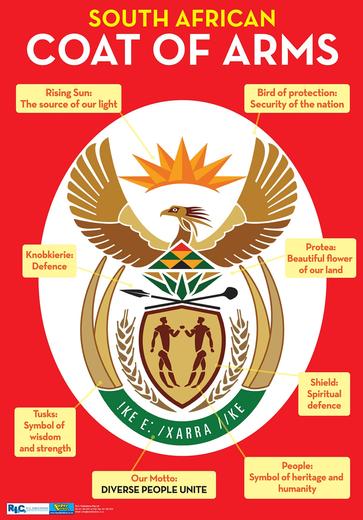
The RSA motto post 1994 is: !ke e: /xarra //ke, written in the Khoisan language of the /Xam people, literally meaning diverse people unite. It addresses each individual effort to harness the unity between thought and action. On a collective scale it calls for the nation to unite in a common sense of belonging and national pride - unity in diversity.

Between 1961 and 1994 the RSA motto was Unity is Strength.
Let us strive for unity in our diversity.

Someone responded to my message: 
Before 1994 it was apartheid and segregation. 

I replied: 
Yes, it was. 
I love the way that I understood it to be - allowing the 'Bantu' to be themselves without having to compete with the very different ways of the 'European' people, so that they could progress in the way that was least competitive to themselves. As I understand it, that policy, created by believers in Calvinism, was based on love and compassion rather than on hatred. I do not deny that the implementation of the policy was not without fault or imperfection.
During the time of separate development, referred to by many as Apartheid, the 'Bantu' people had what Thabo Mdange KaTshiwo apparently claims to have been among the highest quality health care, hospitals, schools, literacy, standard of living, and so many things as compared to many countries in Africa and of 'Third World Countries'. These advantages were paid for by the taxpayers who were a small percentage of the population of South Africa (as is almost certainly the case in just about every nation in the world) and most of those taxpayers would have been the despised and hated 'Europeans' that were running that system that was referred to as apartheid and segregation. 🤔 
There were injustices then. Is it fair to say that there are no injustices in South Africa now? Are there not injustices in just about every country, in 2023? 


As I recall, the present governing ANC (African National Congress) party had the slogan on their election posters 'A better country for all'. Is it a better country for all in 2023? If so, then that would be progress. Have we really progressed? Yes, we are better in some ways. But can we honestly say that even the least of us now has a better state of well-being in 2023 than the 'disadvantaged black people' had just before 1994?

I pray earnestly that our diverse people will unite, that the government will stress that every citizen has equal rights as stated in the Bill of Rights in our constitution, but more importantly, the Founding Provisions state that every citizen is 'equally subject to the duties and responsibilities of citizenship' for ensuring those equal rights. That means that the lowest and the highest should be working together for the rights of every citizen rather than just demanding that 'the government' provide them with the rights that they deserve or demand. Each citizen should work to the extent that she or he is able to earn enough to be contributing meaningfully to the taxes that will fund those equal rights. Each citizen should be wise in exercising their democratic right - and responsibility - to vote for a party that will actually deliver on meaningful promises.
I look forward to us really having a better country for all. In my understanding, there are injustices in our present government. I was told to not look equally at job applications when preparing to interview applicants for jobs at SANBI (South African National Biodiversity Institute). I was instructed to not treat all races and genders as equal, but to deliberately exclude certain applicants, even if they were most appropriately qualified for the position being advertised. Is that really better than pre 1994, 30 years after declaring that every citizen has equal rights? 🤔

I love South Africa. I don't think that all is perfect now. I know that all was not perfect then. I am trying earnestly to love every other child of God, striving for the best strength possible that is all the better for our diversity if we will be one.
Unity is Strength. Unity in Diversity will give greater Strength.
May we have that greater strength, I pray in the name of our gracious Lord and Saviour, Jesus Christ, amen.

Note: It is difficult to fact check Thabo Mdange KaTshiwo on the 'EVIL APARTHEID OF THE BOERS', but you can look at this Facebook post and this Wordpress article and decide for yourself what is fact and what is fiction. 

I hope that my thoughts are the fruits of a disciple of Jesus Christ and not of a follower of Satan. I honestly try to be part of the solution and not part of the problem. I hope that each reader of this blog post will strive to be part of the solution and not part of the problem!

10 January 2021

Faith is a real part of life for atheists, agnostics or irreligious

I was thinking a lot in the wee hours of this morning about the fact that faith is a real part of life - for everyone.

We tend to think that we live without faith in some things, but let me share how faith in the unknown and unseen is a reality for all - whether they acknowledge it or not.

Each and every one of us lives by faith in so many different aspects of our lives

Some think that they can simply dispel any thought of God because they believe that science indicates that it is possible for life to exist without divine intervention. There are knowledgeable people like Darwin that argue sufficiently strongly that the power of natural selection might have enabled all life - the millions of species of plant, insect, bird, reptile, fungus, and every other class of organism - to have evolved without any intervention by some divine power. And so they live their lives without regard for the inconveniences of the commandments that they reckon impact on their freedom, comfort and convenience by requiring sacrifice of some sort or another at the request of some unseen being.

Let me share at least three aspects of life in which each and every one of us demonstrates faith, and how there can be an impact on our freedom, comfort and convenience should we fail to abide by associated rules.

Electricity

We enjoy the benefits that we derive from electricity without fully comprehending the complexity of exactly what it is, and what is involved for us to be able to use that light, heater, air conditioner, stove, machine, computer, mobile phone, game, television, refrigerator, or whatever device that we are so accustomed to using that enables us to enjoy freedom, comfort and convenience. We might even chafe at the suggestion that we should reduce our consumption by turning off unnecessary lights, computers, heaters, and so forth. We do not always consider the complexity of the electricity infrastructure that needs to be adequately supplying vastly more electricity than is required for demand at any given time. Electricity needs to be available in the network of power lines, cables and wires for us to be able to use any electrical device whenever we wish to flip the switch. 

We tend to not think of the fact that those administering the power grid have to be adequately prepared with increasing capability to generate excess power in order to meet the continually increasing demands due to consumption due to an ever increasing population, industry, leisure and other needs. The leaders in South Africa and in several other parts of the world have failed to adequately prepare for the need for sufficient generating capacity to cater for these increasing demands. They need to prepare for outages due to planned maintenance of the existing generating facilities as well as unplanned failures of generating facilities due to insufficient coal, water or other sources of energy, or simply disasters like leaking nuclear plants. We might object to paying taxes and tariffs that are levied in order to make it possible to have the generating capacity that we enjoy - especially if we see any dishonesty in anyone in any level of the hierarchy involved. 

It is highly commendable that many people have opted to generate some power using solar or wind in order to reduce demand and increase supply.

We, in turn, often do not exercise restraint to not consume more than we actually need. Then we complain when there is an unplanned power failure or planned loadshedding because it impacts on our freedom, comfort and convenience. We each have rights, but we also each have responsibilities to help reduce demand and facilitate increasing supply.

We have great faith in electricity despite our lack of understanding everything involved in it.

Water supply

We have recently had a serious impact in Cape Town due to a shortage of water.  There had been less rainfall in previous years than is the norm and so our storage facilities were emptying at a rate that was in excess of the rate of inflow to meet the demands for water. 

This is not new - I remember my sister telling us of the shortage of water in England when she was there in the 1970s because there had been less rain in preceding weeks that was the norm. I remember dams being very low in parts of South Africa in about every decade or two of my life, and the rejoicing that we had when they were filled to overflowing with subsequent rains.

Many of us use water without due regard for our responsibility to conserve this valuable resource. We might fail to turn off water when it is not needed, to use less, to repair leaks, to stop using wasteful water features. We often carelessly allow water to flow out into the drainage system that feeds into our processing plants or into rivers that simply flow into the sea. 

During the recent time of crisis there was much complaint about the impacts on freedom, comfort and convenience that the water restrictions caused. Many of us installed water tanks that enabled us to harvest rain that did fall and thus reduce demand on public water supply. But many did not consider the needs for the authorities to cater for increased demand by building and maintaining water storage facilities, desalination plants, or other means of providing an adequate supply of fresh drinking water to meet the demands of a growing population and industry. Once again, many grumble about paying taxes and tariffs that enable the authorities to prepare to meet anticipated demand, especially when there is any hint of dishonesty in anyone in authority.

Viral infection

The world has been impacted by the COVID-19 coronavirus that has seriously impacted on our freedom, comfort and convenience. We have been called upon to help reduce the spread of the virus by wearing masks, sanitising hands, exercising social distancing, reducing gatherings, staying at home, and many other serious impacts on our normal ways of living. We were initially required to stay at home in order to help the medical system to prepare adequately for meeting the demands for care, oxygen, and beds for those infected. Then we were asked to exercise personal responsibility in order to reduce the rate of spread of the virus due to thoughtless acts. Many complained about the costs to us in terms of taxes and tariffs, and the impact on freedom, comfort and convenience that has arisen, and too many have had super-spreader events or irresponsible behaviour that have caused the virus to spread to thousands of people who were particularly vulnerable due to age or specific health issues, and more recently the virus has been contracted by many younger people than was the case in the first wave in South Africa and other countries all around the world.

Conclusion

In each of these cases, we live by faith - faith in supply, faith in the planning of the authorities, faith in what we probably do not fully understand or comprehend, and what we certainly cannot easily see with our eyes. Those electrons moving in the power network, those impurities that are removed from our drinking water, those viruses that we cannot fully see or understand. We have to trust that other people have the required knowledge, understanding, foresight, wisdom, integrity, and whatever is required for us to be able to enjoy freedom, comfort and convenience. 

Despite our exercising faith in these ways, many ridicule those who live by faith in a divine plan, declaring it to be unreasonable. If we look carefully at what is happening in nature around us, we might be humble enough to acknowledge that we do not fully understand genetics, speciation, ecology, selection, and everything that is involved in order for a species to survive. We might also need to be humble enough to acknowledge that there might be a divine being who knows more than man does collectively. We might observe that we actually see a decline in species numbers over time and no evidence for new species forming despite the rapidly changing environmental niches that are supposed to have made it possible for new species to be selected and become established in the distant past. We do not necessarily have any personal experience with breeding flowers, rabbits, pigeons or anything to fully appreciate those selection processes described by Darwin for features like colour or size - let alone the innumerable characters that are not visible to the breeder and cannot be selected for, such as nuclear and mitochondrial characters that make species survive and thrive. But an all wise and knowing divine creator can select for these unseen characters.

Natural selection certainly is possible, but it is immeasurably improbable. It takes a certain amount of humility to accept that just maybe there is a divine power that has a plan and directs those selection processes that enable a species to survive. But - let's face it - man is really good at leading to the extinction of many species, resulting in a nett loss while we do not see the increase of species numbers through mutation, genetic isolation, mate selection, and ultimately the selection of new favoured races. 

All of these things denote to me that there is a God. I am comfortable in my mind that there is design and planning that has resulted in the wonderful freedom, comfort and convenience that we are able to enjoy on this planet Earth. I accept that I need to be responsible for enabling the provision of freedom, comfort and convenience for other humans and organisms by being careful in the choices that I make to not be wasteful, to not spread infections, to not be disrespectful of the freedoms, comfort and convenience of others. My living responsibly, paying taxes, tariffs, even tithes, is part of the way that I can help others to have a more meaningful experience in life, appreciating the abundant natural heritage that we do have and facilitating supply, rather than just demanding more and more in terms of freedom, comfort and convenience. I think often of that first instruction to man to be fruitful, multiply and replenish the earth, and subdue it: and have dominion over all living things.

I am grateful for the commandments and guidance through prophets that have taught us about the divine creator who desires our eternal freedom, comfort and convenience and wants us to have that eternal perspective that will enable us to be part of the supply of solutions rather than simply adding to the problems arising from an ever increasing demand.

I have observed many people that are atheist, agnostic or irreligious demonstrating an innate divine nature of faith, hope and charity in their responses to the challenges of electricity supply, water supply, and COVID. It is unfortunate that I have seen some religions people who have demonstrated a lack of faith, hope and charity in some of the things that they have done or said in these same situations that we are all facing. I hope that I continue to demonstrate faith, hope and charity. That is the desire of my heart, even although I fail at most times to be a perfect example of what I intend to be.

Images 

Ken Powrie: Vaal Dam overflowing, 1967
https://toursofutah.com/blog/christus-statue-salt-lake-city-tours/
Walking with masks: Les Powrie
https://www.polity.org.za/article/eskom-unit-1-of-the-koeberg-power-station-returned-to-service-2015-06-02


10 May 2020

Some thoughts on responsibilities of Government and people re COVID-19

Sal and I join Herman Mashaba in supporting President Cyril Ramaphosa – and we join him in his concern about the many members of the cabinet that are divisive, exclusive, destructive and obstructive rather than uniting, inclusive, constructive and supportive.

I have had a lot of thoughts on this matter. I am impressed with the way that Abraham Lincoln described democracy: Government of the people by the people for the people.

Our own South African Constitution states that every citizen has equal rights, followed by the statement that every citizen has equal responsibilities. Under the section 3 Citizenship of Chapter 1 (3.2.a, 3.2.b)
(2) All citizens are ­
a.       equally entitled to the rights, privileges and benefits of citizenship; and

b.      equally subject to the duties and responsibilities of citizenship. 

As I looked at some of the images that went around regarding the plight of poor people around the country due to COVID-19 I saw place for cultivation of crops in home gardens that have no crops, but the people complain of being hungry.

One thing that has impressed me working with a volunteer indexing programme at SANBI (South African National Biodiversity Institute) is that most of our volunteers are from Australia for a South African programme! I firmly believe that everyone should work to the extent that he or she is capable, especially if receiving a social grant. Requiring volunteer service would also encourage those receiving the social grants the get themselves better educated and skilled in order to improve their employability. Volunteer work also can have a great advantage in that it helps to develop important skills such as the way that Indexing helps people to become skilled in interpreting information, computer skills, etc.

One volunteer in Australia let me know that she is involved with SAFARIS to fill a requirement of the social grant that she receives from the Australian Government. She is required to give a certain amount of time volunteering if she is receiving a social grant because she is not employed. I feel that such a work requirement would be extremely beneficial in South Africa. For example, there is a great deal of litter all about, and abundant devil thorns and invasive species and it seems as though a lot of people do not take pride in their own country! They would surely be offended if I said that it is MY COUNTRY and not THEIR COUNTRY but they do not take care of OUR COUNTRY! But, most important, in the light of every citizen having equal responsibility, I feel that needs to be stressed – every citizen has equal responsibility to ensure the rights of every other citizen. This is particularly important with the needs of COVID-19 where each individual has an equal responsibility.

SAFARIS (Southern African Friends and Researchers Indexing Specimens) is the volunteer programme that I started that involves transcribing information from historical biodiversity specimens and records. I started this because I have been involved in FamilySearch Indexing, a similar volunteer programme, for many years that transcribes information from images of birth, marriage, death and other records for family history research and I realised that this approach would be valuable for biodiversity records.


20 November 2019

Beggars - what do we do?


Yesterday I was faced by yet another beggar who, I think, was displeased because I did not give him something. Gertjie was his name.

As I continued to work through the day, I pondered. Does someone like Gertjie ever go to a clinic for medical or dental help? My taxes contribute to the health system. Does he ever use the services of police, water, sanitation, roads, parks, or any public amenities? Does he ever use night shelter or food kitchen? I give monthly donations in the form of taxes or donations to some of these. What is he doing to ensure that he will be in a position to contribute to these facilities to provide for the next generation?

Years ago we regularly gave food or money to beggars who came to our door. We came to realise that they were apparently spreading the word that beggars would get something at our home and so we had a steady stream of beggars. We were not helping them in the Lord's way, but were simply maintaining them in the beggar state. We decided that, in a personal time of need with illness in the home and shortage of money, that we had to turn them away and suddenly the stream of beggars stopped coming to our door. We still have the occasional beggar, but we rarely give them something unless they are prepared to work for it, but do sometimes give something small when prompted to do so, with the instruction to not come back to us, but to go to the soup kitchen where they can be assisted to get themselves out of the gutter rather than simply remaining in the gutter.

My thinking yesterday reminds me that we should be encouraging people more purposefully that, as is stated in two clauses right next to each other in the Founding Provisions of the constitution of South Africa:
    Citizenship
    3. (1) There is a common South African citizenship.
        (2) All citizens are—
              (a) equally entitled to the rights, privileges and benefits of citizenship; and
              (b) equally subject to the duties and responsibilities of citizenship.
        (3) National legislation must provide for the acquisition, loss and restoration of citizenship.
    We need to encourage people to meet their responsibilities - meeting the rights, respect, needs of others - instead of simply asking for others to meet their rights or needs. This is tough, but love is tough.

    We need every person in the nation to be contributing to the extent that he or she is able, using their own unique strengths, talents, abilities to build a better South Africa for all. We need builders and not wreckers; producers rather than consumers; givers rather than takers.

    I firmly believe in the principles given in the talk by Spencer W. Kimball - Welfare Principles: the Gospel in Action. May I contribute what I can, and work towards helping others to contribute to the extent that each is able.